The role of intermediates in drug production
A pharmaceutical intermediate is a compound produced during the synthesis of an API that undergoes further molecular change before becoming the final drug substance. A single API route may pass through several intermediates, each adding structural complexity — a ring formed, a functional group protected, a chiral centre set.
Outsourcing these steps to dedicated intermediate manufacturers lets drug companies focus capital and regulatory effort on the final API and formulation stages. It also spreads risk: a formulator with qualified intermediate suppliers can scale output without building every reaction step in-house.
Intermediates therefore sit at the centre of the modern pharma supply chain. Generic programmes, innovator pipelines and contract manufacturers all depend on a steady, specification-true flow of these building blocks.
Quality requirements: the bar keeps rising
Because an intermediate's impurities can carry through to the API, regulators and customers expect intermediate makers to operate with API-like discipline. That means defined specifications for assay, purity and known impurities, validated analytical methods, and batch-wise release testing backed by a Certificate of Analysis.
A credible quality control laboratory runs HPLC, GC, UV-Vis spectrophotometry, Karl Fischer titration, pH and TLC as baseline instrumentation, with impurity profiling and stability data where the chemistry demands it. Genotoxic impurity awareness and change control complete the picture.
Documentation is part of quality, not an afterthought: MSDS/SDS for safe handling, Technical Data Sheets for process teams, and DMF support where regulated markets require it. Buyers increasingly audit intermediate suppliers the way they audit API sources.
Reliable sourcing and manufacturing
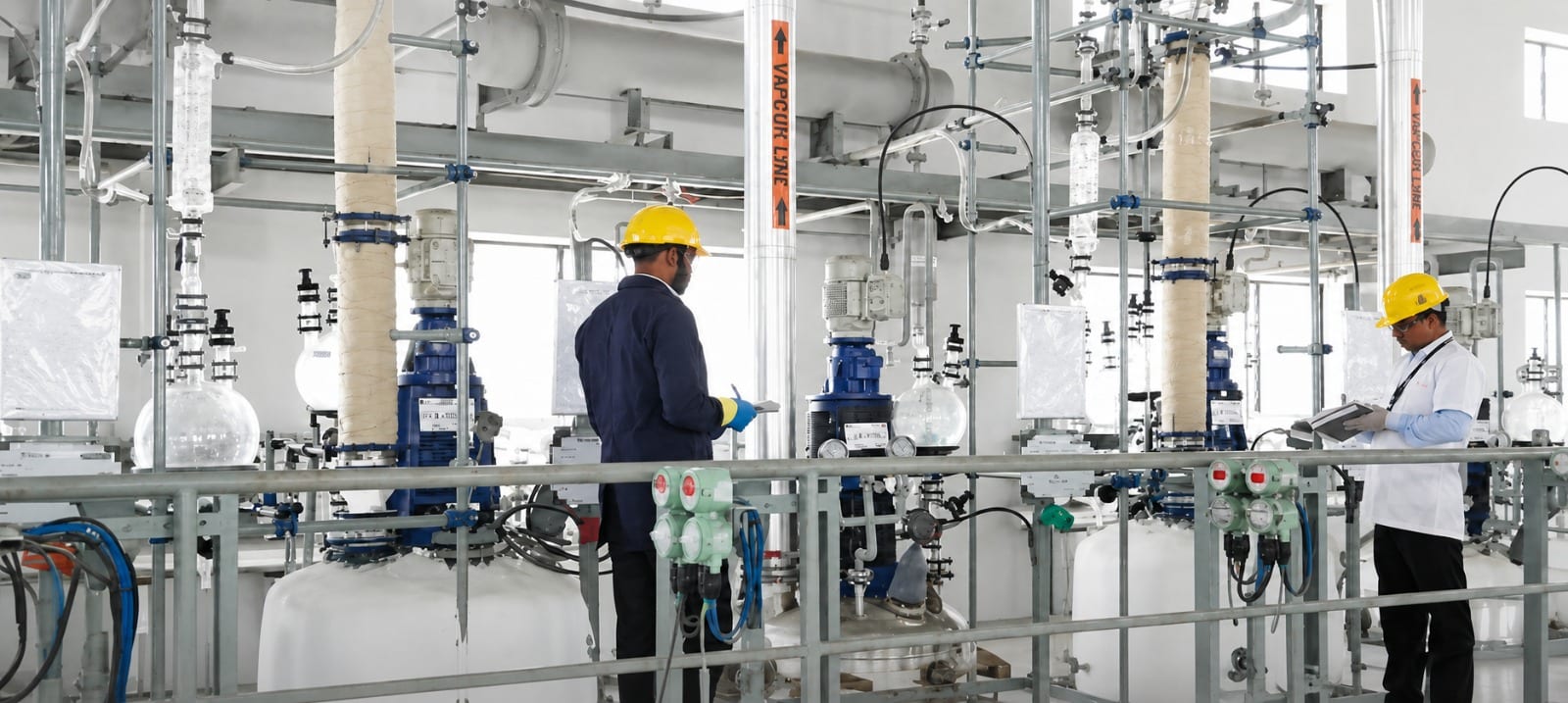
Supply reliability rests on three foundations. First, manufacturing capability: reactors sized for the volumes you need, a demonstrated scale-up path from kilo lab to plant, and experience with multi-step, hazardous or impurity-sensitive chemistry.
Second, raw-material security: a manufacturer that qualifies multiple upstream sources and holds sensible safety stock protects your production plan from single-point failures.
Third, partnership behaviour: transparent lead times, proactive communication when anything deviates, and a willingness to host audits. Zentika Pharma builds its intermediate and specialty chemical supply around exactly these foundations — quality systems, in-house analytics, and documentation that keeps customers audit-ready.
What this means for buyers
Treat intermediate sourcing as a strategic decision, not a purchasing line item. Qualify suppliers on quality systems and analytical depth, insist on complete batch documentation, and favour partners with a clear scale-up path. The savings from a cheap, weak source disappear the first time an impurity excursion or a supply gap stalls your API campaign.